Learning Manual (P1) - Synel UK
Introduction
General Information
Course Timings
• Morning Session: 9.30am – 12.45pm | Afternoon Session: 1.30pm – 4.45pm
Health & Safety and Comfort
- Fire alarms | Room temperature | Refreshments and food requirements | Toilets
Etiquette and Participation
- Mobiles on silent | Mutual respect | Maximum participation | Ask questions
Making Notes
• Please complete the manual throughout the training programme.
Course Overview
- Establishing a Common Service Language
- Service Vision
- Using Positive and Persuasive Language
- Service Levels Framework™/ Keeping
Customers Informed
- Creating a Seamless Customer
Experience
Desired Learning and Performance Outcomes
Develop Uplift Enhance Improve Increase
Service People Customer Customer Organisation
Culture Performance Experience Feedback Performance
Establishing a Common Service Language
Introduction
A key part of creating a culture of service excellence is establishing a common language around service.
Every department within an organisation has its own language.
Financial
Sales
IT
HR
‘Invoices’
‘Balance Sheets’
‘Pipeline’
‘Closing’
‘Laptop’
‘USB’
‘P45’
‘Induction’
Establishing a Common Service Language is not about introducing a raft of new jargon and buzzwords into an organisation. In fact, quite the opposite. It’s about ensuring that communication is clear and understandable. The desired outcome is consistency, not complexity.
The most common way to describe what exceptional service looks like is to use clichés:
‘Going the extra mile’
‘The customer’s always right’
‘Going above and beyond’
‘The customer is king’
However, asking people to ‘Go the extra mile for customers’ leaves too much to interpretation; one person’s ‘extra mile’ is another person’s ‘average’.
What’s required is a language that specially describes the behaviours required to practically and consistently deliver exceptional service.
Common Service Language
Here are some examples of Common Service Language:
‘Level 4 Service’
e.g. Approach: ‘Show Care’ & ‘Add Value’ = Tailored Representative Suggestions
‘Informative language’
e.g. “Based on” or “Due to” or “As a result of” or “Despite taking these preventative actions”.
‘Reducing language’
e.g. “Currently” or “On this occasion” or “At present”.
Service Vision
Technical Fix vs. Psychological Fix
Introduction
A seamless customer experience is achieved when representatives deliberately avoid divulging inappropriate information that could be regarded as negative, unhelpful or irrelevant by the customer.
Learning and Performance Outcome
- Acts as an ambassador for your organisation by carefully choosing the way organisational shortfalls are presented to the customer – demonstrating maturity and good judgement.
- Protects the customer experience and maintains the customer’s trust, confidence and cooperation.
- Relies on more than ‘common sense’ to respond to awkward and potentially embarrassing situations, to reduce the chances of unnecessary escalations.
Considerations
Avoiding Subconscious Attention Seeking
If you have an issue with the way your organisation works, your subconscious brain may want to share this with others to reinforce your own frustration.
These frustrations are better reserved for conversations with your manager, not customers, as they add no value to the customer experience. While some customers might empathise with such comments, organisational shortfalls are still being revealed that could influence the customer’s decisions in the future and be used against the organisation: “Even your staff think your process isn’t suitable.”
Apply
Scenario:
You are on a telephone call and your computer starts to run slow as you’re searching for information.
“The systems are running typically slow!”
Negative Customer Perception
Seamless Alternative
•
•
Scenario:
The customer asks you why they haven’t received a call back promised to them by one of your colleagues.
“We’re short staffed today!”
Negative Customer Perception
Seamless Alternative
•
•
Apply
Scenario:
The customer asks a question you don’t know the answer to.
“I haven’t been trained on how to do that!”
Negative Customer Perception
Seamless Alternative
•
•
Scenario:
The customer was told something incorrect by your colleague which you know to be wrong.
“I don’t know why they said that!
They shouldn’t have given you that information!”
Negative Customer Perception
Seamless Alternative
•
•
Consider the Pros and Cons of Applying the Methodology
Pros
Cons
•
•
Train Your Brain to Form New Habits
Cause
“When I encounter [situation/behaviour]”
Response
“I will apply [skill/mindset]”
•
•
Introduction
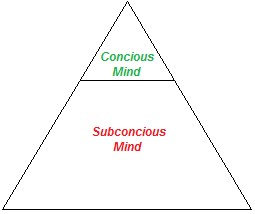
A positive and persuasive communicator understands the conscious and subconscious impact of language. They skilfully choose the right word or phrase to strengthen their message.
Desired Learning and Performance Outcomes
- Carefully selects the right words to strengthen a message and create a more positive customer experience (due to an increased awareness of the impact of language on the subconscious brain).
- Projects confidence and professionalism, building the respect and trust of others.
- Presents unwelcome information in a manner that reduces the likelihood of escalations and complaints.
Considerations
Strengthen Your Message
• ‘Congruent’= in agreement or harmony. ‘Incongruent’= not suitable, or not fitting well.
Accomplished communicators use congruent language to strengthen their message. For example, if they want to portray positivity they use positive/affirmative language such as “Yes”, “Absolutely” or “100 per cent”.
Consider the Subconscious Impact of Language
A legendary Aviva case study proves how language influences the subconscious mind.
 Aviva representatives were asked to replace the word “Should”
with “Will” when confirming the expected arrival dates of insurance policies in the post.
This seemingly minor change resulted in a 69% reduction in
return calls – improving customer satisfaction by eliminating
millions of unnecessary interactions.
Why was this? It appears that when the noncommittal “should” was used, customers’ subconscious minds raised a red flag. They just weren’t convinced the matter of the arrival date had been settled and felt a need to call back later. “Will”, however, settled their minds
and fewer call backs occurred. Source: https://beyondphilosophy.com/wp-content/uploads/2014/09/aviva-case-study.pdf
Quickly Embed Good Habits by ‘Polishing the Term’
You don’t have to remove a bad habit to embed a good habit. ‘Polishing the Term’ uses the bad habit as a prompt for the good habit. For example, when a person thanks you, use your bad habit response (“No problem”) as a prompt for the good habit response (“You’re welcome”). In other words, you reply “No problem – you’re welcome.” Once the good habit is an embedded response, it’s easier to remove the bad habit completely, leaving only the good habit – “You’re welcome” – behind.
Defeatist language
“All I can do” or “I can only” or “I don’t know!”
Reasons to Avoid
Positive Alternatives
Defeatist language
- ‘Defeatist’ = a person who expects or is excessively ready to accept failure.
- People doubt the representative’s responsiveness, resulting in unnecessary escalations to management for clarity, or a complaint.
Aggressive language
- e.g. “That’s just how it is!” or “Tough!”.
- A confrontational approach, likely to lead to escalations.
Responsive / ‘Can do’ language
- ‘Responsive’ = reacting quickly and positively.
- Present solutions using Responsive language to influence the person e.g. “What I/we can do” or “The best person to speak with” or “Fortunately, I have identified the following alternatives”.
Relate / Apply
Choose a work-based scenario which might lead to either Defeatist language or Responsive language.Describe the two approaches.
Work-Based Scenario
e.g. ‘When a representative doesn’t know the answer to a question.’
•
Defeatist Language
Responsive language
e.g. “All I can do is give you XYZ information.”
•
e.g. “The best department to speak to is…”
•
Negative Priming language
“Unfortunately” or “I’m afraid”
Reasons to Avoid
Positive Alternatives
Negative Priming language
- There’s no value in priming people with negative thoughts / feelings – instead, let them decide how they’re going to ‘think’ or ‘feel’ about the information presented.
- “Unfortunately” and “I’m afraid” are words of pity (the feeling of sorrow), NOT empathy (the ability to understand).
- Never introduce policies using Negative Priming language – if theyare genuinely
‘unfortunate’, surely they’d be changed.
Doubting Questions
- Encourages people to challenge information e.g. “Have you tried?” or “Are you sure?” or “There must be a way to?”.
Informative language
- ‘Informative’ = providing useful or interesting information e.g. “Based on” or
“Due to” or “As a result of” or “Despite taking these preventative actions”.
Reducing language
- ‘Reduce’ = make smaller in amount, size or degree e.g. “Currently” or “On this occasion” or “At present”.
Remove Negative Priming language
- Neutrallyinform e.g. “Unfortunately, David is in a meeting”.
Empathetic language
e.g. “I appreciate the impact” or “I recognise”.
Relate / Apply
Choose a work-based scenario which might lead to either Negative Priming language or Informative / Reducing language. Describe the two approaches.
Work-Based Scenario
e.g. ‘When a task can’t be completed within an agreed deadline.’
•
Negative Priming language
Informative / Reducing language
e.g. “Unfortunately, we won’t be able to complete the task by [deadline].”
•
e.g. “Due to delays with XYZ we won’t be able to complete the task by [deadline].”
•
Consider the Pros and Cons of Applying the Methodology
Pros
Cons
•
•
Train Your Brain to Form New Habits
Cause
“When I encounter [situation/behaviour]”
Response
“I will apply [skill/mindset]”
•
•
Introduction
Asking people to ‘Go the extra mile for customers’ leaves too much to interpretation; one person’s ‘extra mile’ is another person’s ‘average’. Our Service Levels Framework™ clearly defines the behaviours required to consistently deliver exceptional levels of service.
Desired Learning and Performance Outcomes
- Develops a “customer first” mindset / culture based on a shared common service language to improve: teamwork/communication/sharing of information between people/departments; and consistency of service delivered throughout the organisation.
- Understands what a poor vs. exceptional customer experience looks like, to improve service standards with colleagues and customers/clients – making every customer feel valued.
- Looks beyond the transactional nature of the request by taking ownership of responsibilities – for example, identifying and anticipating the needs of customers to proactively guide them and build long-lasting relationships (customer engagement / loyalty).
- Achieves first-time fixes and reduces the amount of duplicated work due to taking a more proactive approach in the first instance, even when under extreme pressure.
Considerations
Definition of a Customer
• ‘Someone that receives your OUTPUT (Productivity / Communication) in the work environment’ = EVERYONE IS YOUR CUSTOMER!
Customer Knowledge Levels
• The default Service Level of a department / organisation is determined by the knowledge levels of the average customer; the more guidance a customer requires, the higher the service level to ensure they receive the desired and, most importantly, correct solution. The more you interact with regular customers, the more you can gauge their knowledge levels and adapt your level of questioning accordingly
Customer Experience
• How does your department / organisation want to be perceived by customers? What experience would you like customers to have? Do you want the journey to be consistent? Will you anticipate customers’ needs or simply wait for them to ask?
Ownership: Effort and Purpose
• Even if you don’t have the capability or are the incorrect person to be helping the customer, you do have responsibilities. Consider your part in the customer’s experience before passing them on to another person/department – for instance, collect the necessary information or reassure the customer that the correct process is being taken.
Framework
Level 4:
Outcome-Focused
Approach:‘Show Care’ & ‘Add Value’
= Tailored Representative Suggestions
Mindset: ‘Ownership’
= “I didn’t ask”
e.g. listening carefully to the customer’s wants/needs/expectations. Using information
collected to provide tailored solutions to achieve (or at least get close to) their desired outcome.
Level 3:
Option-Focused
Approach: ‘Hurl’ & ‘Hope’
= Untailored Representative Suggestions
Mindset:‘Generic’
= “Offer everything”
e.g. presenting many options that aren’t necessarily specific to the customer’s needs.
Level 2:
Task-Focused
Approach:‘Order Taker’
= Customer Led
Mindset: ‘Transactional’
= “THEY didn’t say”
e.g. taking a transactional approach by only doing what has been asked.
Level 1:
Self-Focused
Approach: ‘Disengaged’
= Selfish / Lazy Representative Acts
Mindset: ‘Destructive’
= “I’m not bothered!”
e.g. having personal conversations while the customer is waiting to be served.
Apply
Identify a Colleague and a Customer interaction commonly encountered. Define the specific actions that would be taken when delivering service at the four specified levels.
Level 1:
Self-Focused
Colleague Interaction
Customer Interaction
•
•
Level 2:
Task-Focused
Colleague Interaction
Customer Interaction
•
•
Level 3:
Option-Focused
Colleague Interaction
Customer Interaction
•
•
Apply
Level 4:
Outcome-Focused
Demonstrate ‘Care’
= Listen / question to establish the customer’s needs e.g. “What did you want to achieve?”
Add Genuine ‘Value’
= tailoring suggestions to the customer’s needs “The best way to achieve XYZ is…”
Colleague Interaction
•
•
•
•
Customer Interaction
•
•
•
•
Consider the Pros and Cons of Applying the Methodology
Pros
Cons
Internal Customers (Colleagues):
•
External Customers:
•
Internal Customers (Colleagues):
•
External Customers:
•
Train Your Brain to Form New Habits
Cause
“When I encounter [situation/behaviour]”
Response
“I will apply [skill/mindset]”
•
•